









During plastic processing processes such as injection molding, extrusion, blow molding, blown film, cast film, and plastic compounding, black specks and carbon deposits are one of the major factors causing product defects and high scrap rates.
The presence of carbon deposits can affect the appearance of finished products. In severe cases, it can directly lead to product rejection, resulting in significant material waste and production losses.
Two Main Sources of Black Specks and Contaminants
1. Contaminants Introduced into Raw Materials Before Processing
*These contaminants exist before the material enters the processing machine, including:
*Original black specks already present in raw materials
*Foreign particles attached to packaging bags during transportation
*Contamination from unclean feeding systems
*Black particles generated during the crushing process of recycled materials
*Impurities mixed into colorants or masterbatch
2. Black Specks Generated During the Plastic Processing Process
These black specks are formed during the melting and molding process, including:
*Carbonization caused by material degradation
*Defects or contamination inside the barrel and screw
*Wear debris from mold components such as ejector pins and sliders
Characteristics and Distribution of Black Specks and Contaminants
Black specks are usually small particles with a black or dark brown appearance. They are generally non-reflective.
When the particles become larger, the contaminants may appear as layered structures. They are usually brittle, easy to break, and show porous structures after crushing.
Based on their distribution in finished products, black specks can generally be divided into three situations:
Random and scattered distribution throughout the product
Random and concentrated distribution in a specific area
Occasional appearance only in a certain local area
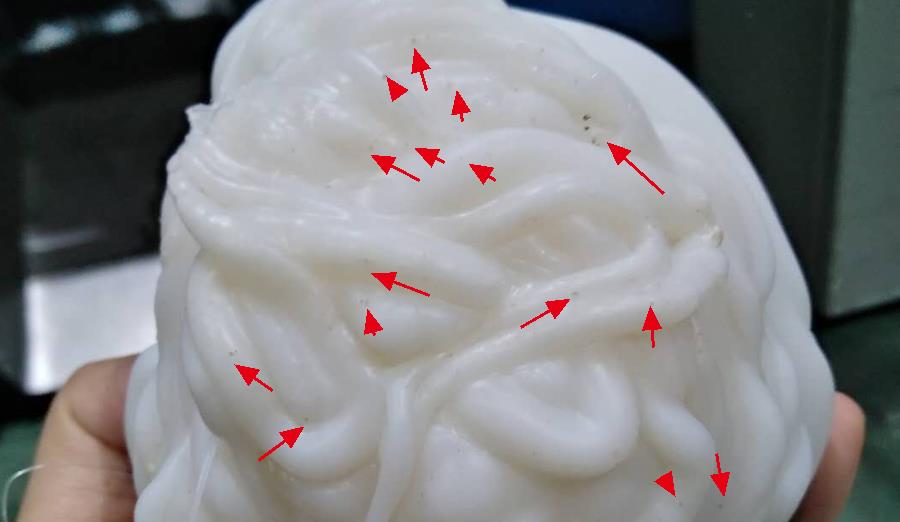
Relationship Between Distribution Depth and Contamination Source
From another perspective, black specks can also be analyzed based on their depth distribution:
Sometimes black specks only appear on the surface of the product. However, black specks located slightly below the surface usually appear lighter in color compared with surface contaminants.
In some cases, black specks exist throughout the entire thickness of the product. Deeper contaminants may not be visible from the surface.
In fact, there is a strong relationship between the distribution area and the depth of black specks. By analyzing these characteristics, the root cause can be identified and targeted cleaning solutions can be applied.
For example:
If black specks are concentrated around the hot runner gate area, the source is likely carbon deposits inside the hot runner system.
If they appear in a specific location, the injection nozzle may be the possible source.
If black specks are randomly distributed, the screw or barrel may be the cause.
After identifying the distribution pattern of black specks, the cleaning method and purging process can be adjusted accordingly for more effective cleaning.
PlasE® provides professional plastic purging compounds for screw and barrel cleaning, helping customers effectively prevent and remove black specks and contamination during plastic processing.
 Skype
Skype
 Web | App
My whatsapp +8613539736806