








Sources of Carbon Deposits During Plastic Processing
The formation of black specks in thermoplastic processing can generally be divided into two categories:
1.Black specks existing before molding, caused by raw materials or contamination.
2.Black specks generated during production, caused by material degradation and processing conditions.
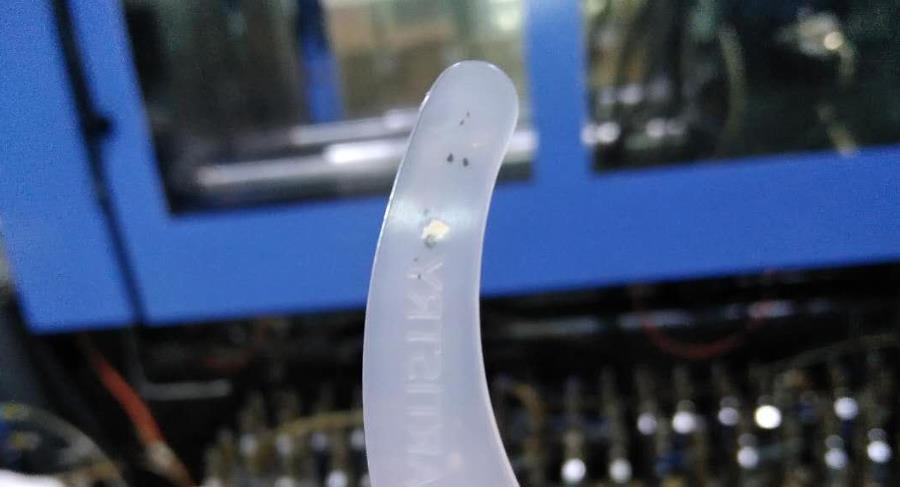
This article focuses on the causes of black specks generated during the molding process, which can mainly be classified into two groups: plastic material carbonization and external factors during production.There are several reasons why plastic materials may undergo carbonization during processing. The most common causes include:
1. Thermal Degradation of Heat-Sensitive Materials
Like flame-retardant ABS and PVC have a narrow processing temperature range. For these materials, precise temperature control of the barrel is critical, especially in areas close to the nozzle.
2. Excessively High Melt Temperature
When temperature is too high, the polymer may undergo thermal decomposition, resulting in carbonized residues.High-temperature engineering plastics like Polycarbonate (PC) and Polyphenylene Ether (PPE) are generally more vulnerable to thermal degradation.
3. Material Residence Time and Polymer Burn-Off
When molten plastic remains in certain areas of the processing equipment for too long, it can undergo thermal degradation, oxidation, and carbonization, forming black deposits.
Common areas where material stagnation occurs include:
1.)Nozzle tip and barrel connection areas
2.)Barrel walls
3.)Melt rings
4.)Nozzle and gate contact areas
5.)Hot runner corners and dead zones
6.)Runner system dead spots
This problem is especially common when processing high-viscosity polymers, where poor material flow increases the risk of material retention and carbon buildup.
4. Excessive Barrel and Screw Clearance
An excessive gap between the screw and barrel can cause molten plastic to remain trapped inside the barrel.Over time, the retained material experiences repeated heating and degradation, eventually forming carbonized residues and black specks.
5. Decomposition of Plastic Additives
Various additives like Antistatic agents, UV absorbers, Infrared absorbers and Colorants (pigments) used in plastic formulations may degrade before the base polymer due to their higher chemical activity under processing conditions.Under high temperature and shear stress, these additives may decompose into dark-colored residues ranging from yellow-brown to black, creating contamination and black specks in molded products.
6. Equipment Wear and Surface Damage
For example, scratches, pits, or surface damage on the screw may trap degraded materials and generate carbon deposits.This issue is more common in processing equipment used for Glass fiber reinforced plastics and Abrasive-filled compounds.
7. Uneven Heating and Local Overheating
Uneven heat distribution inside processing equipment can cause localized overheating and material degradation.This issue frequently occurs during machine start-up and shutdown operations, especially in PE extrusion machines and film blowing machines.
Using a professional plastic purging compound for machine maintenance during shutdown can effectively remove residual materials, reduce carbon buildup, and prevent recurring black speck problems.
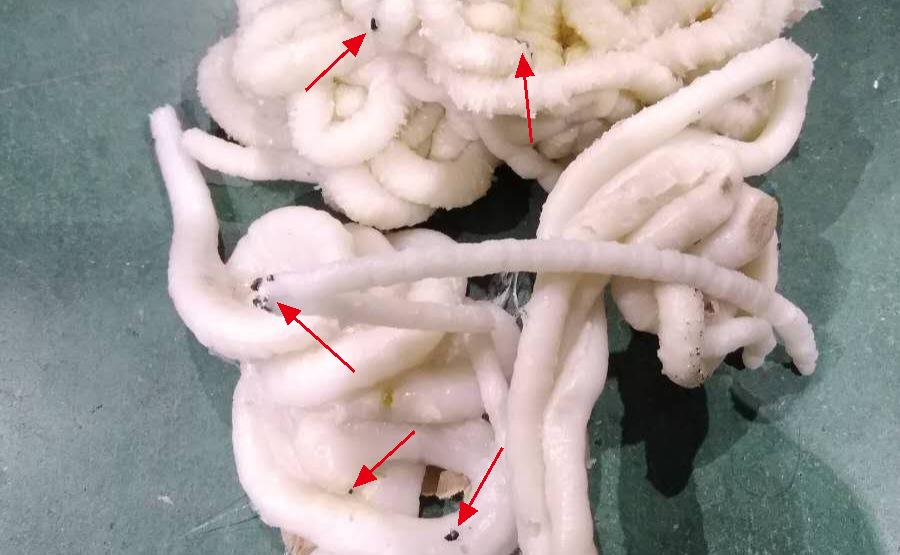
Black specks caused by external factors during production are also very common and can be difficult to eliminate.Typical external sources include:
Ø Poor mold material quality, where iron particles from parting surfaces, molding surfaces, or shut-off areas may fall into the product
Ø Rough ejector pins causing burning or metal powder contamination
Ø Slider mechanisms generating metal debris due to friction
Ø Water leakage inside sliders causing rust or contamination, which may enter the molded parts during movement
Black specks generated during plastic molding due to polymer degradation usually have specific characteristics.
1. Black specks generated in injection molding machines are relatively large in size and thick in appearance, sometimes reaching 1–2 mm in diameter.
These black specks are typically caused by:
Ø Long-term material retention
Ø Local overheating
Ø Polymer degradation and carbonization
The degraded material accumulates inside areas such as the screw or nozzle and is later broken into particles by shear forces, resulting in black contamination in finished products.
2. In extrusion processing, carbonized residues may appear differently.
Because the material flows through a larger opening at the die exit and experiences less shear compared with injection molding, carbon deposits may emerge as:
Ø Large carbonized sheets
Ø Large areas of black contamination
This issue is especially common after machine shutdowns, where remaining polymer inside the barrel continues to degrade and forms carbon deposits.
Conclusion
This article introduces the main causes and identification methods of black specks caused by polymer carbonization during plastic processing.In the next article, we will discuss effective solutions for removing carbon deposits and preventing black speck defects. SANP Technology specializes in solving plastic processing cleaning challenges and providing professional purging compound solutions to help improve production efficiency and reduce downtime.
 Skype
Skype
 Web | App
My whatsapp +8613539736806